
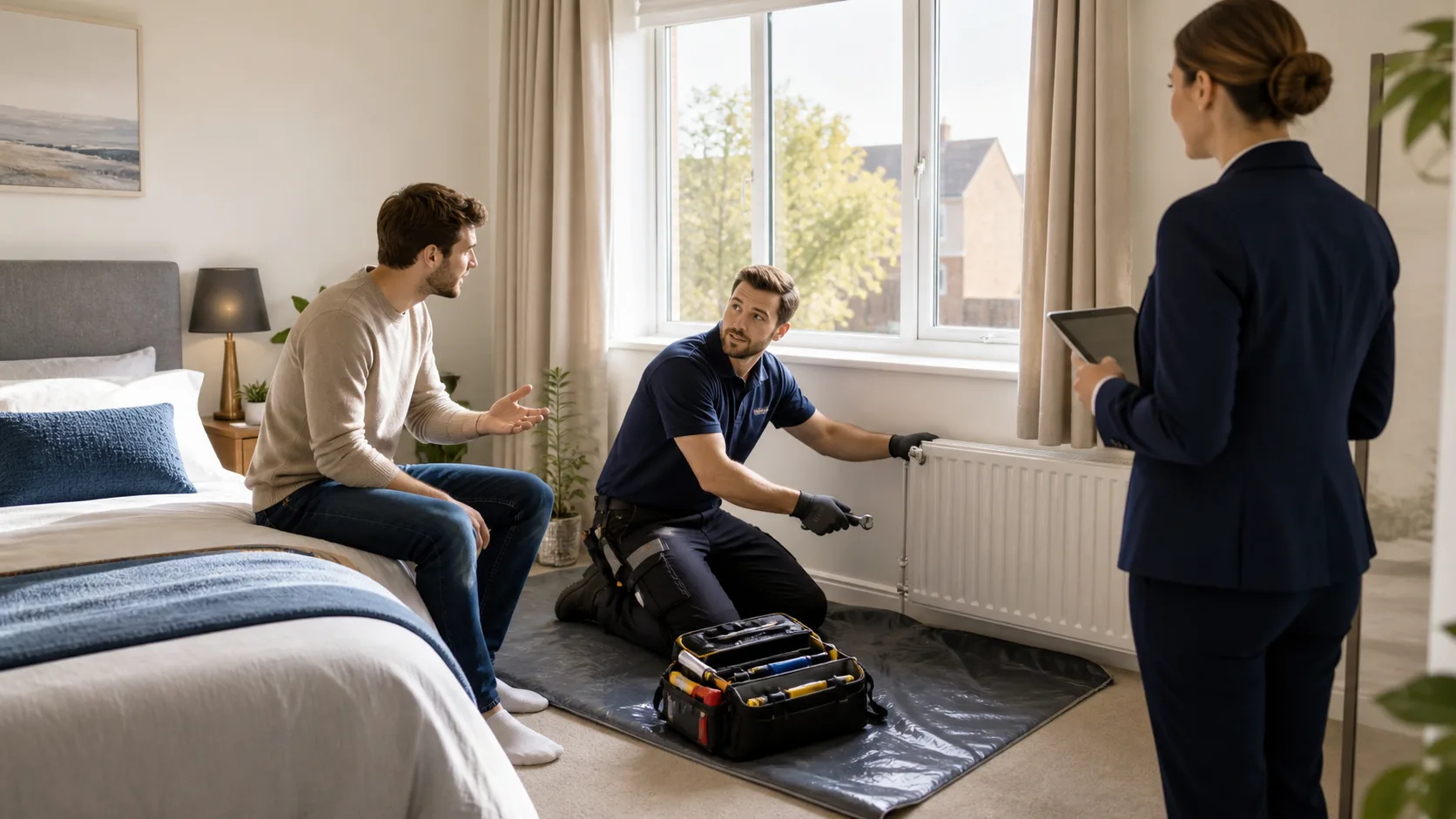
Move in with Confidence When Repairs Arise
A repair issue can feel daunting when you have only just moved into a new student home. Between settling into Colchester, meeting housemates and getting used to university life, even a dripping tap or cold radiator can seem like a much bigger problem than it is.
We want you to feel comfortable speaking up early. Most maintenance concerns are easier to sort out when we know about them quickly, with a clear description of what is happening. A room to rent in Colchester should come with a clear way to report problems, so you are never left wondering what to do next.
When you move in, save the contact details for your landlord, letting agent or property manager, along with any out-of-hours emergency number in your tenancy documents. At Fabdiggs, we aim to provide safe, practical homes where you can report an issue without feeling like you are causing a fuss.
Not every fault has the same cause or urgency. Normal wear and tear can happen through everyday use, while accidental damage may need a different conversation. You do not need to work out which one applies before reporting it. Simply tell us what you notice, whether that is a leak under the sink, a radiator that stays cold, or a damaged-looking socket.
Know Which Repairs Need Immediate Action
Some problems should be reported as soon as you spot them, especially where safety, security or major damage could be involved. September often brings wetter weather, cooler nights and more use of heating, so a small problem can become more disruptive if it is left until later in the term.
Report urgent concerns promptly if you notice:
- A significant water leak or water coming through a ceiling
- A gas smell, electrical hazard or signs of burning
- No heating or hot water during cold weather
- An insecure outside door or window
- A fire safety concern or serious drainage issue
While waiting for help, focus on keeping yourself and others safe. Stop using an appliance if it seems faulty, keep away from water near electrics and move belongings away from a leak if you can do so safely. If you know how to turn off the water supply safely, this may help limit damage, but do not take risks.
Gas, electrical and structural repairs are not jobs for students to tackle themselves. Where there is an immediate threat to health, safety or the property, follow the emergency steps in your tenancy information and contact the appropriate emergency service if needed.
Report Problems Clearly and Keep Useful Records
A short, clear report gives us a better starting point than a vague message. It helps the property team understand how serious the issue may be, what tools or parts might be needed and whether a contractor should attend.
Include the details that matter most:
- The exact room or location of the problem
- When you first noticed it
- What you can see, hear or smell
- How it affects daily living
- Whether it is getting worse
For example, “the bathroom radiator has been cold since last night and the rest of the house is warm” gives us more useful information than “the heating is broken”. The same applies to leaks, appliances and damaged fittings.
Photos and short videos can also help when it is safe and relevant to take them. A picture of a damp patch, visible leak, mould growth, broken fitting or appliance error message can make the situation easier to assess. Keep a note of when you reported the issue and any instructions you were given. This is not about creating conflict. It simply means everyone has the same information and can follow the repair from report to completion.
Use the reporting route set out in your tenancy agreement or welcome information. Telling a housemate may be useful, but it should not be the only way an issue is passed on.
Understand Roles, Access and Repair Times
Repair responsibility can depend on the issue, your tenancy agreement and how the damage happened. In general, landlords and property managers deal with the structure of the home, key services and supplied fixtures. As tenants, you are expected to use the property responsibly, keep it reasonably clean and report faults without unnecessary delay.
If you are unsure who should deal with something, check your tenancy documents before making assumptions. A blocked sink caused by everyday use may need different handling from a pipe leak, for example. Clear reporting still matters in both cases, because it allows the right next step to be arranged.
After a report is made, we may ask a few follow-up questions, arrange a visit, send a qualified contractor or share temporary guidance while a part is ordered. Access to your room or shared areas may be needed during the day, so let us know about practical concerns such as lectures, work shifts or notice requirements.
Some repairs are resolved quickly, while others need specialist skills, replacement parts or further inspection. Knowing this in advance can make the process feel less frustrating. Keep an eye on any updates and continue to report changes, particularly if the problem worsens.
Help Keep Your Student Home Safe and Comfortable
Acting early is one of the simplest ways to protect your comfort, belongings and home. A small leak, damp patch or radiator problem can be easier to manage when it is reported before colder, wetter conditions put more pressure on the property.
Keep your repair contacts somewhere easy to find, read the guidance provided at move-in and report anything that does not seem right. Clear information, sensible safety steps and timely communication help repairs move forward with less stress for everyone.
Find A Comfortable Place To Call Home
If you are looking for a room to rent in Colchester, Fabdiggs can help you find student accommodation with clear support from the start. Our team is here to answer questions about availability, house features and what to expect before moving in. To discuss your options, contact us today.